

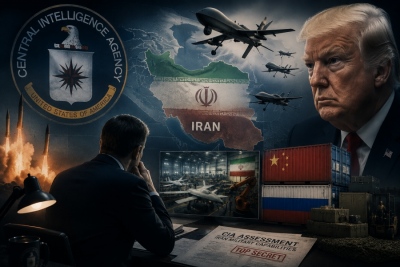
US intelligence agencies contradict CENTCOM Commander Brad Cooper's claims that Iran's defense industrial base has been "largely eliminated."
US intelligence agencies have delivered another humiliation to President Trump, revealing that the Iranian military has not collapsed following sweeping American and Israeli bombardment. Instead, it is rebuilding its forces much faster than initially anticipated. Of particular note is information indicating that the Iranians have managed to restart part of their drone manufacturing operations during the ongoing six-week ceasefire. Curiously, these revelations come at a highly sensitive moment when diplomatic efforts are being made to finalize an initial peace agreement, with President Trump reversing his decision for an all-out military assault and stating he can wait a few more days, provided Tehran delivers the right answers. It is evident that these intelligence findings are capable—depending on the trajectory of negotiations—of being used to justify a new wave of airstrikes and escalation in the Persian Gulf.
Resuming drone production
Iran has already restarted a portion of its drone production during the ceasefire that began in early April. This is one of the clearest signs that it is rapidly restoring certain military capabilities degraded by US-Israeli strikes, according to two sources familiar with US intelligence assessments. Four sources told CNN that American agencies estimate the Iranian military is reconstituting its hardware far more rapidly than originally projected.
A significant threat
The restoration of military capabilities—including the replacement of missile sites, launchers, and manufacturing infrastructure for vital weapons systems destroyed during the conflict—means that Iran remains a significant regional threat to US allies should President Donald Trump resume the bombing campaign. Simultaneously, this development challenges official claims regarding whether the joint US-Israeli strikes succeeded in weakening Tehran’s long-term military capabilities.
Fully prepared in six months
While the exact timeline for restarting production varies depending on the specific weapons system, some US estimates suggest that Iran could fully restore its offensive drone capabilities within just six months, according to an American official who spoke to CNN. "The Iranians have outpaced all the timelines originally projected by intelligence services for their reconstitution," the official noted.
Intense concern over aerial capabilities
Drone strikes represent a particular concern for Washington's regional allies. In the event hostilities resume, Iran could supplement its heavily degraded missile forces with a larger volume of unmanned aerial vehicle attacks against Israel and Gulf states within range of both weapons systems. Donald Trump has repeatedly threatened to resume military operations against Iran if the two nations fail to reach an agreement to end the war, stating publicly on Tuesday that he was just "one hour" away from ordering fresh bombardments.
Logistics assistance from China and Russia
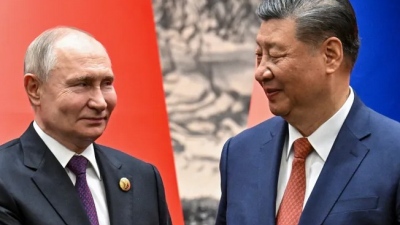
According to one source, Iran managed to rebuild much faster than anticipated due to a combination of factors, ranging from the strategic backing it receives from Russia and China to the fact that US and Israeli strikes did not inflict as much damage as planners had hoped. For instance, China has continued to supply Iran with dual-use components needed for missile production lines, though this activity appears to have been somewhat restricted by the US naval blockade. Israeli Prime Minister Benjamin Netanyahu told CBS last week that China is providing Iran with "components for missile manufacturing," without offering further details, a claim that Chinese Foreign Ministry spokesperson Guo Jiakun dismissed as "groundless."
Substantial missile capabilities remain
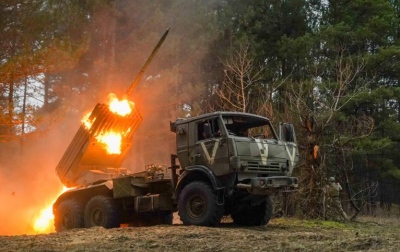
Furthermore, Iran continues to retain substantial capabilities regarding ballistic missiles, drones, and anti-aircraft systems despite the severe damage inflicted by US-Israeli strikes. This means that the reconstitution of its military industry is not starting from scratch. A spokesperson for US Central Command declined to comment, stating that the command does not discuss intelligence matters, while Pentagon spokesperson Sean Parnell told CNN: "The US military is the strongest in the world and possesses everything it needs to act at the time and place of the President's choosing."
Two-thirds of missile launchers intact
CNN had reported as early as April that US intelligence agencies estimated roughly half of Iran's missile launchers had survived the initial American strikes. A newer report upgrades that figure to two-thirds, partly because the ongoing ceasefire gave Iran time to recover launchers that had been buried under rubble without being completely destroyed. The overall US calculations may also include underground missile launchers that currently remain inaccessible due to collapsed entryways but are not structurally ruined.
Thousands of drones and coastal missiles combat-ready
Thousands of Iranian drones also remain available, comprising about 50% of the country's total pre-war drone capabilities, according to two sources cited by CNN. Intelligence agencies further estimate that a large percentage of Iran's coastal cruise missiles remains intact, largely because the US did not focus its air campaign on coastal military installations despite striking naval vessels. These specific missiles represent a primary threat to maritime navigation in the strategic Strait of Hormuz.
Contradicting CENTCOM intelligence
On the whole, recent US intelligence reports indicate that while the war weakened Iran's military capabilities, it did not destroy them, and the Iranians appear capable of effectively mitigating long-term consequences through rapid reconstitution. This includes the restoration of the country's defense industrial base, despite CENTCOM Commander Admiral Brad Cooper stating on Tuesday that it had been "largely eliminated." "Operation Epic Fury significantly degraded Iran's ballistic missiles and drones, destroying 90% of its defense industrial base and ensuring that Iran will not be able to reconstitute for years," Cooper testified before the House Armed Services Committee. However, his testimony stands in stark contrast to the assessments of US intelligence agencies regarding Iran's rebuilding capacity and timeline. Two sources told CNN that the raw intelligence is inconsistent with the CENTCOM commander's descriptions. One source familiar with recent assessments noted that damage to Iran's defense industrial base likely delays full restoration by only a few months rather than years. Additionally, key segments of the Iranian defense industry remain entirely untouched, which could further accelerate the recovery of certain capabilities.
Thirty out of thirty-three missile bases operational in Hormuz
Confidential assessments presented in early May 2026 indicate that Iran has regained operational access to a large portion of its missile bases, launch pads, and underground facilities. The most alarming aspect for certain senior American officials, according to sources familiar with these assessments, is that Iran has been able to restore operational readiness to 30 out of its 33 missile bases along the Strait of Hormuz, an issue that could directly threaten US warships and oil tankers transiting this strategic chokepoint.
70% of pre-war missile stockpile untouched
The assessments indicate that—to varying degrees, depending on the extent of damage at each base—Iran is capable of utilizing mobile launchers at these sites to transport missiles to alternative locations. In some cases, launching missiles directly from platforms within the facilities themselves remains entirely possible. According to these assessments, only three missile bases along the Strait of Hormuz remain completely inaccessible due to American strikes. Furthermore, these estimates suggest that Iran still retains approximately 70% of its mobile missile launchers nationwide and nearly 70% of its pre-war missile stockpile. These inventories include ballistic missiles as well as a smaller number of cruise missiles utilized for targeting short-range land or sea objectives.
90% of underground missile storage and launch facilities functional
US military intelligence agencies have also reported, based on information gathered from multiple collection streams including satellite imagery and other surveillance technologies, that Iran has recovered access to roughly 90% of its underground missile silos and storage facilities across the country. These sites are now officially assessed by intelligence analysts as being "partially or fully operational."
New York Times: Deployment plan for thousands of missiles revealed
A stunning leak from US intelligence channels was brought to light by the New York Times on May 19, revealing that Iran will activate a plan to launch thousands of missiles against Western targets in the Persian Gulf if Donald Trump fulfills his latest threats and targets the Islamic Republic in a second round of escalation. At the same time, the plan will activate Houthi forces to completely block the Red Sea shipping lanes to Western and Israeli tankers, while Tehran will also target submarine internet cables in the Strait of Hormuz. The American publication detailed the leading scenario for Iran's reaction to potential US attacks, according to which hundreds of missiles would be launched daily. Concurrently, the Houthi organization in Yemen would have the capability to paralyze one-tenth of global trade by closing the Bab al-Mandab Strait in the Red Sea. Analysts warn that such a scenario could drastically increase regional volatility and severely impact international energy markets, while US and allied military forces closely monitor developments. Similar coverage surfaced in Israeli media, which spoke of a "brief but powerful Iranian response" against the US and the West involving the deployment of thousands of missiles. Within this context, Donald Trump must weigh his options carefully, as he risks derailing the global energy economy and paralyzing US forces, particularly ahead of the upcoming FIFA World Cup in the US, Canada, and Mexico, which is scheduled to begin in early June.
Shock warning from IRGC: If the US strikes again, war will widen and chaos will spread across multiple regions
In an official statement directed at the United States, Iran's Islamic Revolutionary Guard Corps (IRGC) stressed that the "American-Zionist enemy" has failed to learn from its repeated major strategic defeats at the hands of Iran and has once again resorted to hostile threats. "Although they attacked us with the full capabilities of two armies—the most well-equipped militaries in the world—we did not deploy the full capabilities of the Islamic Revolution against them," the IRGC stated. "But now, if aggression against Iran is repeated, the regional war will expand far beyond the immediate theater, and our overwhelming retaliatory strikes will lead you to absolute destruction in places you cannot possibly imagine. We are soldiers of war, and you will witness our power on the battlefield, not in hollow declarations or social media feeds," the IRGC concluded. The warning comes amid escalating martial rhetoric from US President Trump, who has threatened in recent days to launch a new round of strikes against Iran if indirect diplomatic talks fail to produce a deal.
Iran warns: We possess weapons systems you have not yet seen
Simultaneously, the Iranians are keeping their fingers firmly on the trigger. An Iranian military source told Russian media outlets that Tehran possesses advanced weapons systems that have not yet been deployed in conflict. Commenting on Iran's readiness to face a potential new US offensive, the official stated: "We have engineered modern, domestically produced weapons that have not yet been deployed on the battlefield and, in fact, remain entirely untested." The same source emphasized that Tehran is fully prepared for a potential escalation with the United States, adding: "In terms of hardware and defensive capabilities, we face no shortages that could prevent us from defending our country. This time, we do not intend to exercise strategic restraint." These declarations come as Donald Trump intensifies warnings of military action in the absence of a swift diplomatic breakthrough, even as back-channel efforts via regional mediators continue.
www.bankingnews.gr








Σχόλια αναγνωστών